MENU Cart
EN
Soriphar guarantees the quality and effectiveness of its products
Free shipping from € 75
Adaptogens

Adaptogens: plants that help you cope with stress

How ashwagandha, rhodiola and saffron act on the body’s stress axis, what their active substances are and what clinical studies actually measured.

+46 %
long-term work incapacity due to burnout or depression in Belgium, 2016-2021
+59 %
among the self-employed, the sharpest rise
24
double-blind, placebo-controlled studies with KSM-66® ashwagandha
28 mg
saffron extract a day at the dose studied
What are adaptogens?

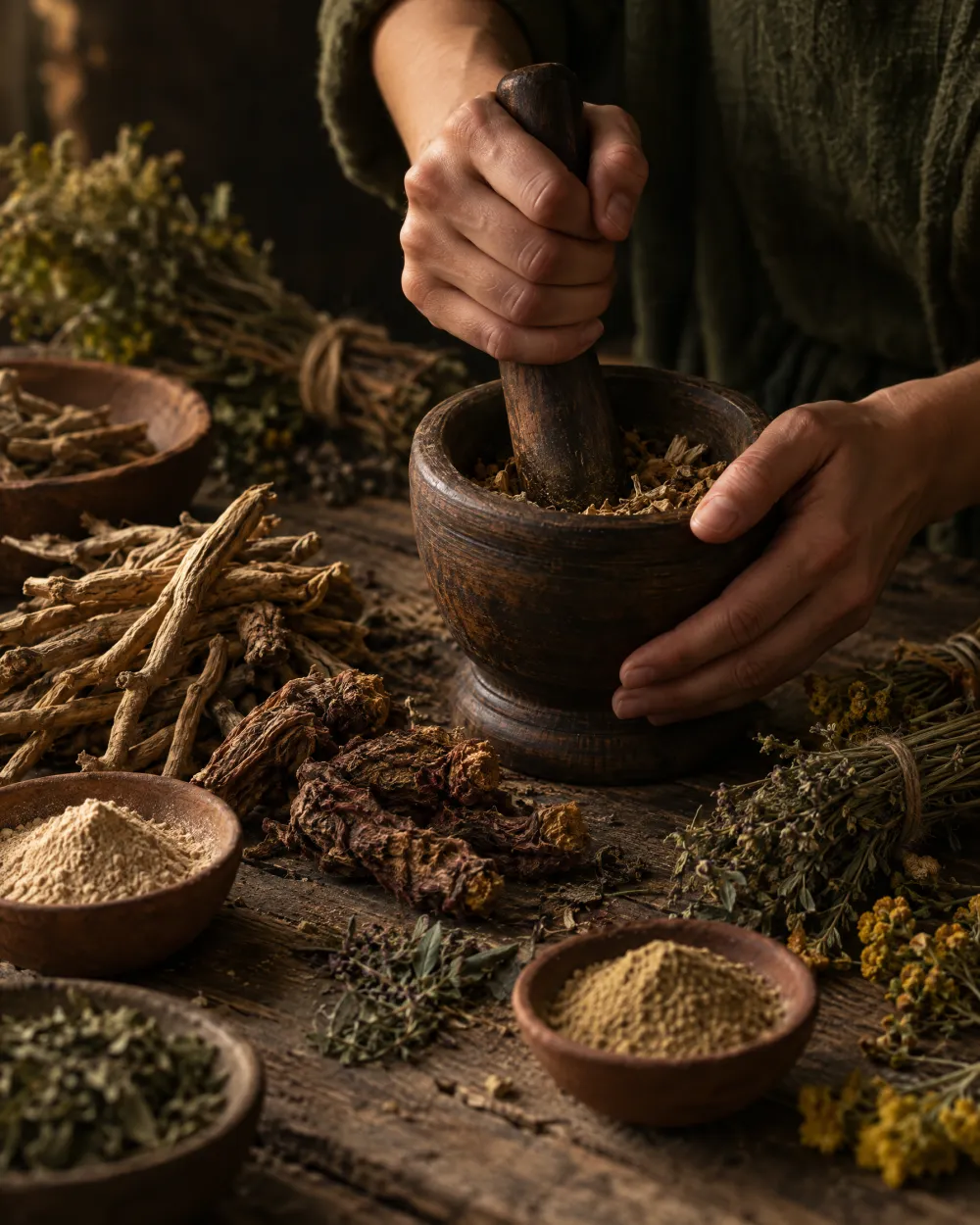
Plants that help the body adapt

The term adaptogen dates from the 1940s and comes from the Russian scientist Nikolai Lazarev. He used it for substances that help the body withstand stress, whether physical, emotional or environmental.

  • Act on the HPA axis, which regulates the stress hormone cortisol
  • Support the balance of the hormonal and immune systems
  • Have been used for centuries, from Ayurveda to Siberian herbal medicine
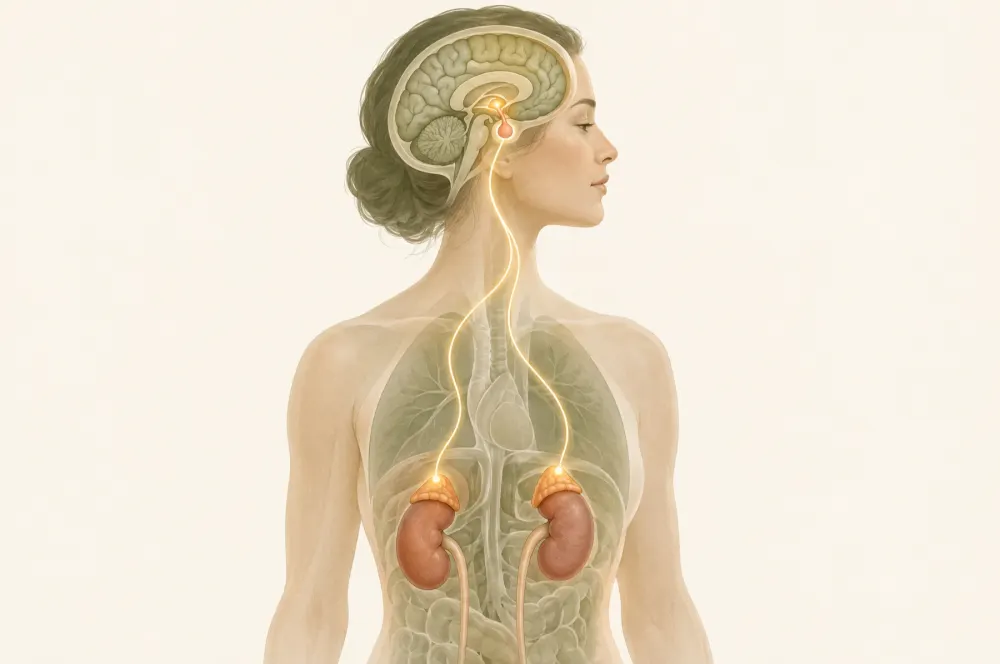
Illustration of the stress axis: hypothalamus, pituitary gland and adrenal glands Hypothalamus and pituitary gland Adrenal glands
The HPA axis connects the hypothalamus and pituitary gland in the brain with the adrenal glands.
The stress axis

What happens during stress

In acute stress the HPA axis sets the body in motion and then slows itself down again. With long-term stress that brake gets out of tune. Adaptogens are studied for their influence on exactly that balance.

  1. Hypothalamus

    Registers stress and produces the signalling hormone CRH.

  2. Pituitary gland

    Responds to CRH by producing ACTH.

  3. Adrenal glands

    Produce cortisol: energy and alertness for the short term.

  4. Feedback

    Cortisol slows the axis down again. With chronic stress that brake works less well.

Three plants

Ashwagandha, rhodiola and saffron

Three plants, each with their own active substances and a growing body of clinical research.

Ashwagandha

Withania somnifera

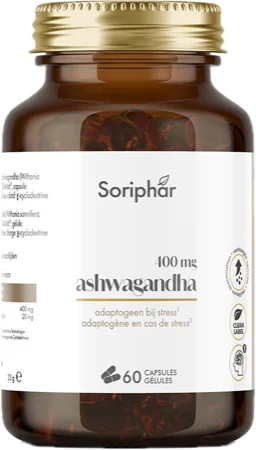
Withanolides act on the HPA axis, on GABA and serotonin signalling and on antioxidant defences. KSM-66® is an extract of the root only, made without alcohol or chemical solvents.

How it was studied

Randomised, double-blind and placebo-controlled, 60 days, in adults with stress complaints. Measured on perceived stress and cortisol.

Chandrasekhar et al., 2012
Rhodiola

Rhodiola rosea

The golden root from the cold mountain regions of Europe and Asia. Rosavins and salidroside influence the stress response, neurotransmitters and energy production in the cell.

How it was studied

170 mg a day of standardised extract (3 % rosavins, 1 % salidroside), 14 days, in healthy adults under acute stress. Measured on mental performance and fatigue.

Shevtsov et al., 2003

Saffron

Crocus sativus

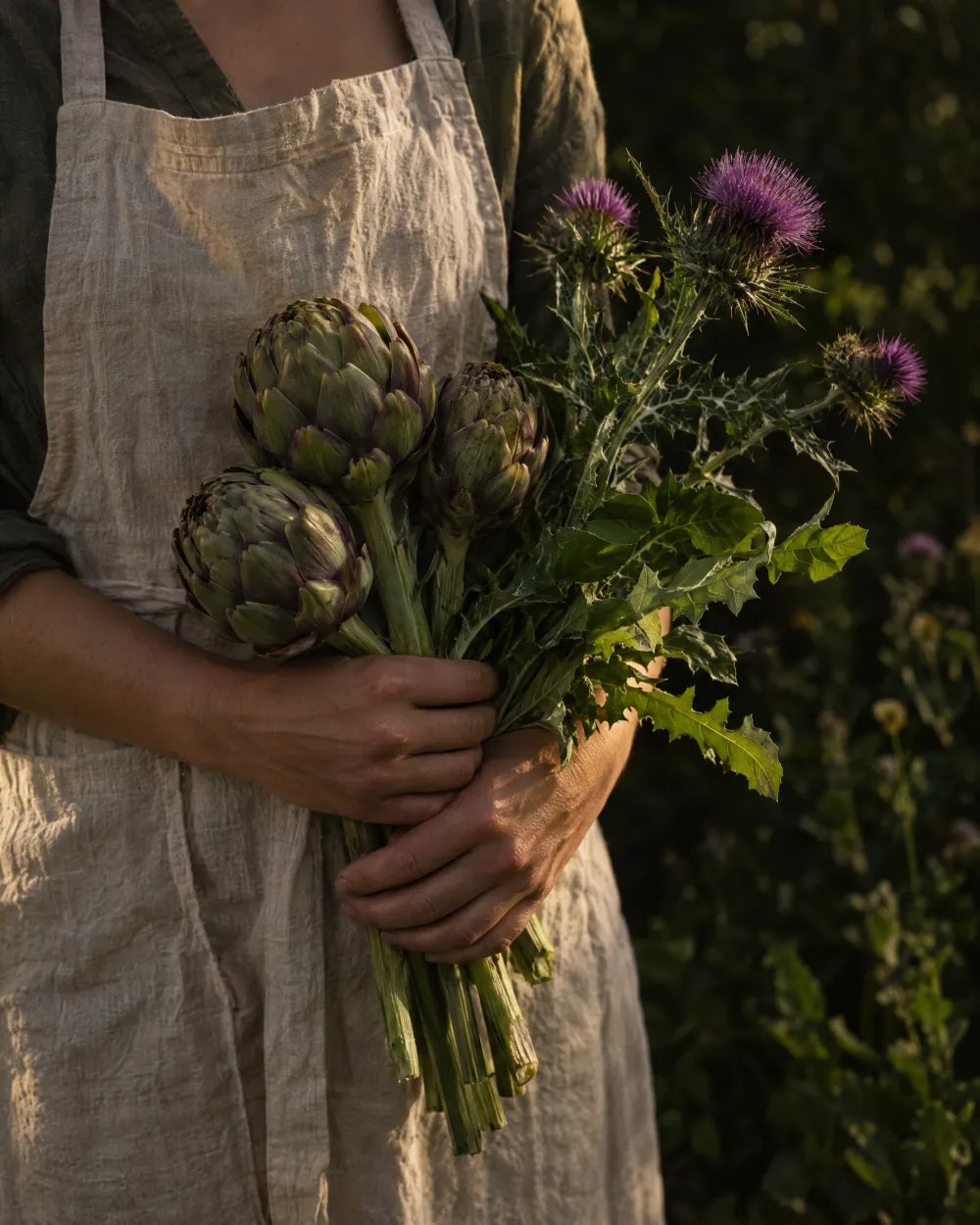
Crocin gives saffron its golden colour, safranal its scent. Both influence serotonin, dopamine and noradrenaline and act as antioxidants.

How it was studied

28 mg of affron® a day, 4 weeks, in 128 healthy adults, double-blind and placebo-controlled. Measured on mood, stress and anxiety.

Kell et al., 2017
Standardised

The active substance, in black and white

Studies use extracts with a fixed amount of active substance: withanolides in ashwagandha, rosavins and salidroside in rhodiola, crocins and safranal in saffron. We put that amount on the label.

A typical label
Ashwagandha extract 800 mg
of which active compound not stated
Our label
KSM-66® ashwagandha extract 800 mg
of which withanolides 40 mg
In the right context

An addition, not a replacement

With persistent low mood or exhaustion, professional support and, where needed, medical treatment come first. Adaptogens and saffron are studied as additional support, alongside a healthy lifestyle and in consultation with your doctor or pharmacist.

A layered approach
  1. Lifestyle as the basis Sleep, exercise, food and moments of relaxation.
  2. Professional support Talk to your GP or a psychologist in good time if complaints persist.
  3. Medical treatment Where needed, matched to the severity of the complaints.
  4. Additional support Adaptogens or saffron, in consultation with your doctor or pharmacist, certainly alongside medication.
Sources (9)
  1. RIZIV. Langdurige arbeidsongeschiktheid: hoeveel langdurige burn-outs en depressies? Cijfers 2016–2021.
  2. Chandrasekhar K, Kapoor J, Anishetty S. A Prospective, Randomized Double-Blind, Placebo-Controlled Study of Safety and Efficacy of a High-Concentration Full-Spectrum Extract of Ashwagandha Root in Reducing Stress and Anxiety in Adults. Indian J Psychol Med. 2012;34(3):255–262.
  3. Choudhary D, Bhattacharyya S, Bose S. Efficacy and Safety of Ashwagandha (Withania somnifera (L.) Dunal) Root Extract in Improving Memory and Cognitive Functions. J Diet Suppl. 2017;14(6):599–612.
  4. Kelgane SB, Salve J, Sampara P, et al. Efficacy and Tolerability of Ashwagandha Root Extract in the Elderly for Improvement of General Well-being and Sleep. Cureus. 2020;12(2):e7083.
  5. Shevtsov VA, Zholus BI, Shervarly VI, et al. A randomized trial of two different doses of a SHR-5 Rhodiola rosea extract versus placebo and control of capacity for mental work. Phytomedicine. 2003;10(2–3):95–105.
  6. Spasov AA, Wikman GK, Mandrikov VB, et al. A double-blind, placebo-controlled pilot study of the stimulating and adaptogenic effect of Rhodiola rosea SHR-5 extract on the fatigue of students caused by stress during an examination period. Phytomedicine. 2000;7(2):85–89.
  7. Kell G, Rao A, Beccaria G, et al. affron® a novel saffron extract (Crocus sativus L.) improves mood in healthy adults over 4 weeks in a double-blind, parallel, randomized, placebo-controlled clinical trial. Complement Ther Med. 2017;33:58–64.
  8. Khaksarian M, Behzadifar M, Behzadifar M, et al. The efficacy of Crocus sativus (Saffron) versus placebo and Fluoxetine in treating depression: a systematic review and meta-analysis. Psychol Res Behav Manag. 2019;12:297–305.
  9. WHO. Burn-out an “occupational phenomenon”: International Classification of Diseases. 2024.

Stay in the loop

New insights in your inbox, clearly explained and backed by evidence. No offers without substance.

Privacy Overview

This website uses cookies so that we can provide you with the best user experience possible. Cookie information is stored in your browser and performs functions such as recognising you when you return to our website and helping our team to understand which sections of the website you find most interesting and useful.